

Why Your Period Is 4 Days Late with Cramps (Not Pregnant) in Chicago, IL
Experiencing menstrual cramps without the arrival of your period can be both confusing and stressful, especially when pregnancy tests return negative. This common phenomenon is often driven by natural hormonal shifts, acute stress, or underlying reproductive health conditions like PCOS and endometriosis. Dr. Michelle Trandai, MD, helps you understand the root causes of these phantom cramps and delayed cycles, which is the first step toward finding relief and regulating your body. For more information, contact us or request an appointment online. We are conveniently located at 5449 N Broadway, Chicago, IL 60640.
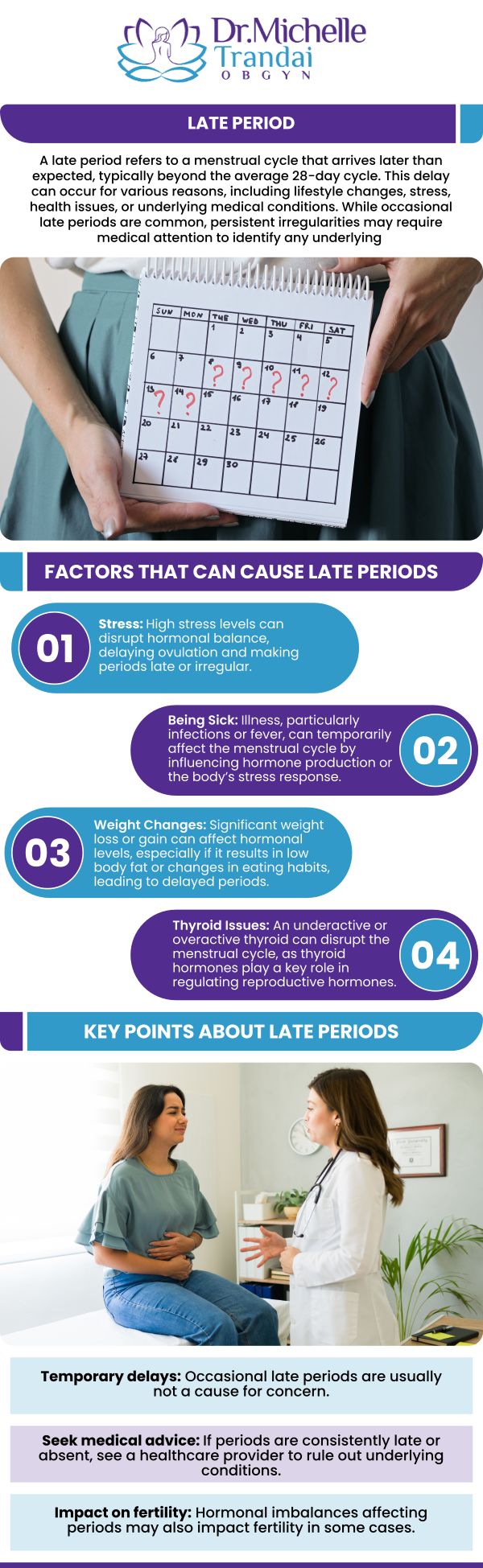
Table of Contents:
Why do I feel period cramps but have no bleeding and a negative pregnancy test?
What underlying conditions cause late periods and cramping?
How late does a period have to be before I should worry?
How can Dr. Michelle Trandai help with irregular periods in Chicago?
Feeling period-like cramps without actual bleeding and a negative pregnancy test can be confusing, but it is quite common. One frequent cause is anovulation, where your body prepares for a period, causing cramping, but an egg isn’t released, resulting in delayed or absent bleeding. Another possibility is ovulation itself; some women experience ‘mittelschmerz,’ a sharp or cramping pain in the lower abdomen when an ovary releases an egg.
Furthermore, gastrointestinal issues like irritable bowel syndrome (IBS), gas, or constipation are frequently mistaken for menstrual cramps due to their similar location and sensation in the lower abdomen. Stress, sudden weight changes, and severe anxiety can also physically manifest as pelvic pain or delay your period, creating a ‘phantom period’ scenario. Lastly, early pregnancy tests can sometimes yield false negatives if taken too soon before hCG hormone levels rise sufficiently. If cramps persist for days without bleeding or become severe, it is a good idea to consult a healthcare professional.
Polycystic Ovary Syndrome (PCOS) is one of the most prevalent causes. PCOS creates hormonal imbalances that prevent regular ovulation, resulting in missed periods and pelvic discomfort. Endometriosis is another common culprit; it occurs when tissue similar to the uterine lining grows outside the uterus. This condition can cause severe pelvic cramps, inflammation, and highly irregular bleeding patterns.
Ovarian cysts—fluid-filled sacs on the ovaries—can also delay menstruation while causing localized, sharp or dull aching pain in the lower abdomen that mimics menstrual cramps. Additionally, thyroid disorders, whether hyperthyroidism or hypothyroidism, can significantly throw off your menstrual rhythm and metabolism, leading to cycle irregularities.
Uterine fibroids, which are noncancerous growths in the uterus, may cause heavy, late, or irregular cycles and chronic pelvic pressure. Finally, Pelvic Inflammatory Disease (PID), an infection of the reproductive organs, can cause pelvic pain and disruptions.
Minor fluctuations in your monthly cycle are completely natural. A standard, healthy menstrual timeline generally falls between 21 and 35 days. Medical professionals typically define a period as ‘late’ once it extends past 30 days from your previous cycle’s first day, or roughly five to seven days beyond when you expected it to start. Usually, a short delay of up to a week is nothing to panic over. Everyday lifestyle disruptions—such as intense stress, significant dietary shifts, traveling across time zones, or temporary hormonal imbalances—are frequent culprits.
That said, it is time to pay closer attention once you surpass the one-week mark, assuming you have already verified you are not pregnant. From a medical standpoint, it is highly recommended to consult a healthcare provider if your menstruation is absent for three months in a row, which is clinically diagnosed as amenorrhea. Furthermore, seek immediate medical care if a delayed cycle coincides with alarming symptoms like extreme pelvic pain, a high temperature, or abnormal vaginal discharge.
If you are struggling with irregular periods in the Chicago area, Dr. Michelle Trandai, MD, offers expert, compassionate care at her solo OB/GYN practice located at 5449 N Broadway. With over 20 years of dedicated experience, Dr. Trandai provides highly personalized treatment tailored to your specific reproductive health needs.
She specializes in diagnosing and managing the complex underlying conditions that often cause irregular or painful periods, including Polycystic Ovary Syndrome (PCOS), endometriosis, and uterine fibroids.
During a consultation, Dr. Trandai will thoroughly evaluate your symptoms to pinpoint the root cause of your irregular bleeding. Her practice offers a comprehensive range of solutions, from IUD insertions and contraceptive management to hormonal therapies and lifestyle guidance.
Patients consistently praise her clear communication and detailed preparation, ensuring that you feel entirely comfortable and informed every step of the way. With same-day and convenient telemedicine appointments available, Dr. Trandai’s patient-centered approach ensures that you receive the accessible, top-rated care required to regulate your cycle and improve your overall health.
For more information, contact us or request an appointment online. We are conveniently located at 5449 N Broadway, Chicago, IL 60640. We serve patients from Chicago IL, Edgewater IL, Evanston IL, Ravenswood IL, Uptown IL, Lake View IL, Lincoln Park IL, Buena Park IL, Bowmanville IL, Boystown IL and Roscoe Village, IL.
Check Out Our 5 Star Reviews





 How May I Help You?